
Palm Jumeirah Logs Dh92.5 Million Off-Plan Sale in March 2026:
What the Price Per Sq Ft Signals About Dubai’s Branded Luxury Demand
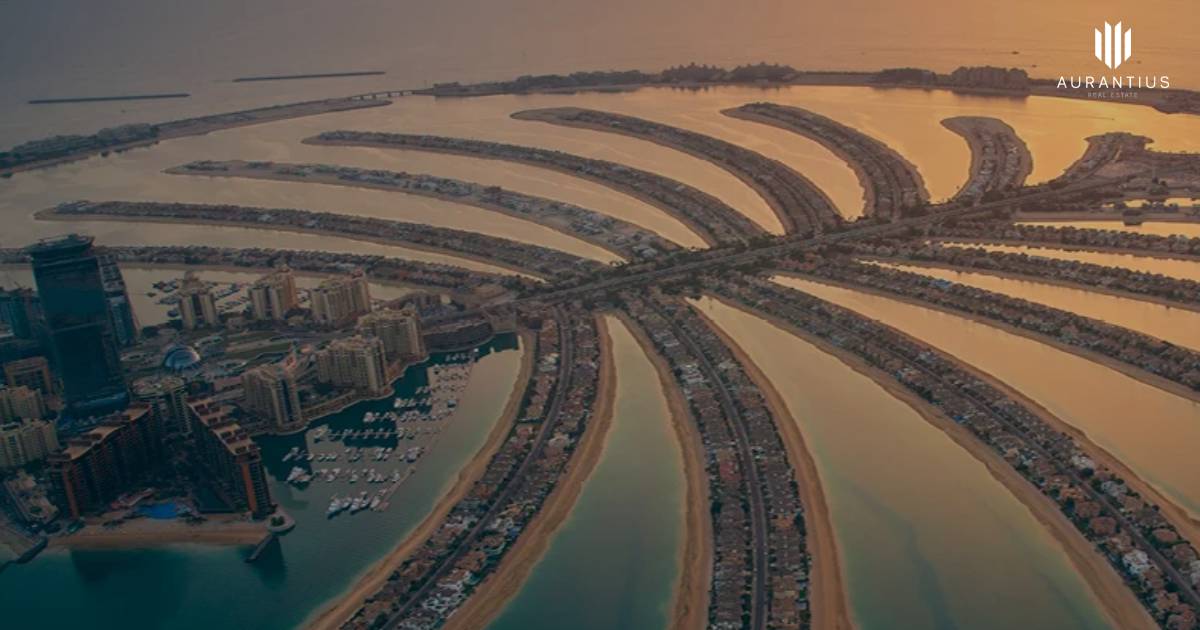
Dubai recorded a Dh92.5 million off-plan apartment sale on Palm Jumeirah in March 2026, adding another high-value transaction to the emirate’s luxury pipeline and reinforcing the role of branded residences in the current market cycle. The apartment is located within Armani Beach Residences, a high-end branded residential development positioned in one of Dubai’s most internationally recognized waterfront zones. For investors, the relevance of this sale is not limited to the headline price. It also provides a data point on price-per-square-foot levels in the ultra-prime, branded segment during a period when market participants are monitoring sentiment and liquidity across the region.
According to transaction information referenced through Dubai REST, the Dubai Land Department’s application, the unit spans about 11,520 square feet and traded at an average price above Dh8,020 per square foot. A price-per-square-foot figure is particularly meaningful for comparison because it allows investors to benchmark premium positioning across branded and non-branded inventory, even when unit sizes and layouts vary. In ultra-luxury markets where transactions are less frequent, each verified pricing benchmark can influence buyer expectations and developer positioning for adjacent releases.
The location matters. Palm Jumeirah has a scarcity profile tied to limited developable waterfront supply and strong global recognition, which typically supports liquidity even when broader markets slow. Branded residential product adds another layer of scarcity through service positioning, design differentiation, and global brand alignment. In underwriting terms, branded assets can sustain premium pricing when buyer demand is driven by lifestyle, privacy, and capital preservation rather than by yield alone.
Intraday Market Activity: Liquidity Signals Beyond Single Trophy Transactions
Alongside the individual sale, the market was also described as active at the aggregate level on the same day. Total Dubai real estate transactions were cited at around Dh2.4 billion by midday trading, with property sales exceeding Dh1.86 billion. These intraday figures function as a liquidity signal. For investors, liquidity is measured through the ability of the market to produce continuous transactions across segments, not only through isolated trophy sales. When large values appear alongside broad transaction flow, the market is interpreted as operational and active rather than reliant on a small number of headline deals.
Liquidity is also important because it supports price discovery. In segments where transactions are frequent, comparable pricing is easier to validate. In ultra-prime segments where trades are fewer, pricing can be influenced by small sample sizes. A combination of high-value deals and consistent mid-market activity can strengthen confidence in the market’s overall function, especially for international buyers considering entry timing and exit planning.
Luxury Segment Expansion: What 2024–2025 Deal Volumes Indicate About Depth of Demand
Dubai’s luxury property segment has expanded in both transaction count and total value, supported by demand from high-net-worth individuals and internationally mobile buyers. The market has been described as benefiting from investor-friendly regulation, a favorable tax environment, and the city’s global lifestyle positioning. The structural point for investors is that Dubai’s luxury demand has not been limited to a single year or a single micro-market. It has been broad enough to produce thousands of luxury transactions annually, indicating depth rather than one-off spikes.
Reported figures for 2025 cited 6,668 luxury property transactions valued at Dh143.8 billion, compared with 4,735 deals valued at Dh99.3 billion in 2024. The stated change represents a 41% increase in transaction volume and a 45% rise in total value. For investors, this type of growth suggests both expanding participation and higher average ticket sizes. It also implies that the luxury segment is supported by repeat capital inflows rather than by isolated purchases.
Luxury performance also has market spillover effects. Strong luxury demand can influence adjacent segments through perception and pricing anchors, especially in waterfront and branded corridors. It can also affect the supply pipeline, as more developers allocate inventory toward premium positioning. Investors evaluating this environment should track whether premium launches remain aligned with absorption capacity, as oversupply risk can appear when premium inventory expands faster than qualified demand.
Branded Residences: How Investors Typically Evaluate Premium Pricing
Branded residences often command premiums because they bundle design, service standards, and brand association into the asset. For buyers, these features can add value through lifestyle utility and perceived status. For investors, the premium must be evaluated through resale liquidity, service charge structure, and the depth of future buyer demand. Premium pricing can remain durable when the brand is internationally recognized and when the asset sits in a location with scarcity characteristics.
In practice, the investment thesis for a branded residence differs from a yield-maximization strategy. Many branded purchases prioritize capital preservation, long-term holding, and personal use flexibility. Rental strategies can still apply, yet service charges and operational standards can materially influence net returns. Investors typically model branded assets using conservative occupancy assumptions and realistic cost projections to ensure the premium paid is justified under long-duration holding scenarios.
Conclusion
The Dh92.5 million off-plan sale at Armani Beach Residences on Palm Jumeirah, at a reported average above Dh8,020 per square foot, reinforces the continued pricing strength of Dubai’s branded ultra-luxury segment in March 2026. Combined with reported intraday transaction values across the wider market and the expansion of luxury deal volumes from 2024 to 2025, the data points to an environment where high-value transactions are occurring alongside broader market liquidity. For investors, the key is to interpret trophy sales as pricing benchmarks, then validate strategy using segment-level absorption, cost structure, and realistic exit liquidity assumptions.
For Dubai luxury market context, pricing benchmarks, and investor-focused research across prime districts, follow Aurantius Real Estate for structured coverage designed around fundamentals and decision-making clarity.