
AED 595 Million in Deals, Serenia Completed, and What Comes Next
Dubai’s luxury property market posted AED 595.5 million in high-end transactions during March 2026 alone. To put that in context: that is roughly AED 19 million per day in premium villa and apartment deals in a month when regional geopolitical tensions were dominating financial headlines.
If that number surprises you, it shouldn’t. Dubai’s luxury real estate market has consistently demonstrated that ultra-high-net-worth demand operates on a different cycle from general market sentiment. And the March 2026 data makes that point with precision.
This report covers the key transactions, the Serenia Living completion milestone, active developer projects, what the numbers mean for yield and capital appreciation and where the market goes from here.
March 2026 Transactions: What the AED 595.5M Tells Us
The transaction volume is significant not just for its size but for its geographic spread. These deals were not concentrated in a single location they were distributed across several of Dubai’s most established premium districts, which is the hallmark of a deep luxury market rather than a speculative pocket.
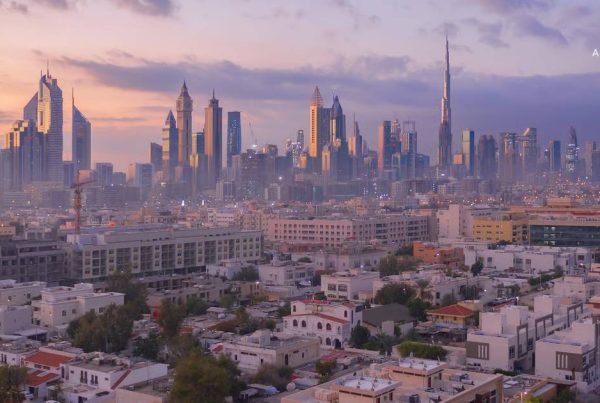
Palm Jumeirah contributed some of the highest-value individual transactions, as it consistently does. The island’s finite land supply and global address recognition continue to support pricing at the absolute ceiling of Dubai’s residential market on a per-square-foot basis. Downtown Dubai recorded penthouse and branded residence deals where Burj Khalifa district positioning commands a location premium that is impossible to replicate elsewhere in the emirate. Dubai Hills Estate contributed villa transactions where golf course frontage and master-community infrastructure justified pricing at the upper end of that district’s range.
This multi-location distribution of AED 595.5 million in a single month tells a consistent story: luxury demand in Dubai is broad-based, not speculative, and it is not dependent on any single project or location to sustain its volume.
Serenia Living Completion: Why This Matters Beyond One Project
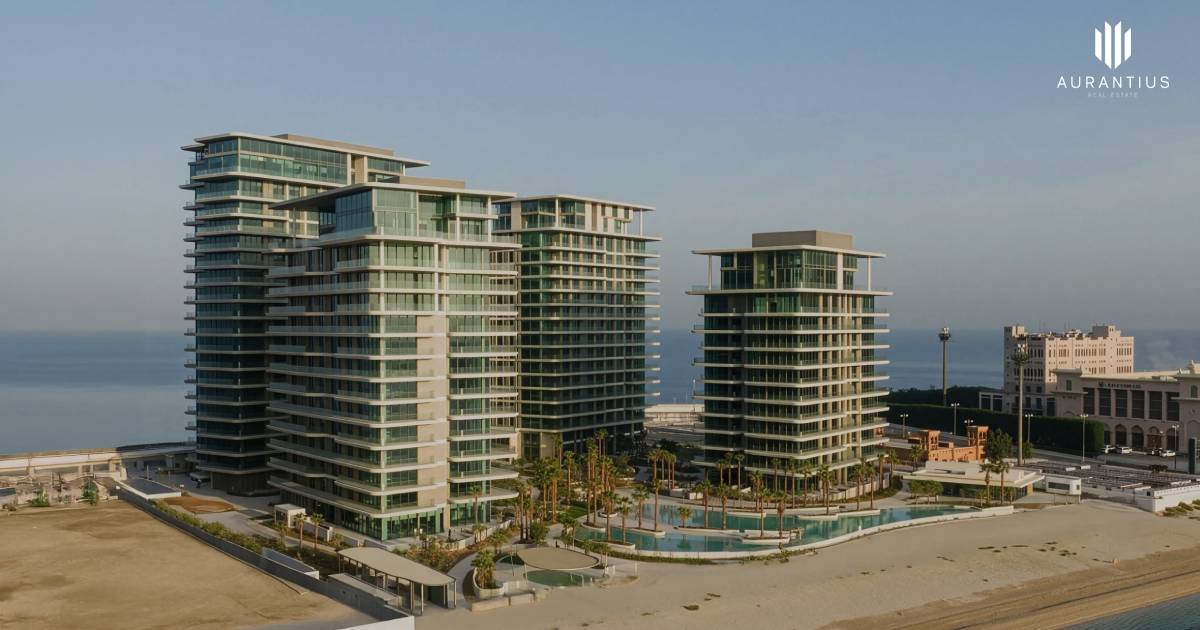
The successful delivery of Serenia Living a $1.82 billion ultra-luxury development completed on schedule by Palma is a data point that matters to every luxury off-plan investor in Dubai, not just those who bought into that specific project.
On-time delivery of a development at this scale and price point is harder than it sounds. It requires financial strength, construction management capability, supply chain reliability, and the commercial discipline to maintain standards through a full development cycle. When a developer achieves it, it sends a clear message to the broader market: contractual commitments at the ultra-luxury tier can be met and delivered as promised.
For investors evaluating Chevalia Estate, The Bristol, Selvara 3, Avenue Residence 7, or Binghatti Amberhall all active ultra-luxury off-plan projects in Dubai’s current pipeline Serenia’s delivery provides relevant precedent on what responsible luxury development execution looks like. It raises the bar against which future completions will be measured, and it strengthens the overall confidence base for luxury off-plan commitments across the sector.
The Developer Landscape Driving Dubai’s Luxury Pipeline
Dubai’s luxury real estate output in 2026 is being shaped by a developer community that has moved well beyond standard residential delivery into genuinely differentiated product categories.
Emaar continues to set the quality benchmark for large-scale luxury through its Address Residences portfolio and the Burj Khalifa district ecosystem. Nakheel‘s Palm Jumeirah villa and apartment inventory remains the most sought-after address for resale luxury transactions, underpinned by the island’s unmatched combination of scarcity and global recognition. DAMAC is expanding its branded luxury residence strategy through projects including Binghatti Amberhall, where architectural identity functions as a primary value driver rather than a secondary marketing element. Sobha Realty attracts end-users who prioritise material specification and build quality, often at the expense of brand name a positioning that builds long-term loyalty among a discerning buyer segment. Meraas has demonstrated a unique ability to create entirely new luxury lifestyle categories, from Bulgari Residences to City Walk’s consumer experience ecosystem. Select Group has consistently delivered premium waterfront apartments in Dubai Marina that achieve per-square-foot pricing above most market comparables validating a product-focused luxury strategy that prioritises location and finish over scale.
Together, these six developers are producing a pipeline that spans polo lifestyle estates, architecturally branded towers, waterfront ultra-luxury residences, and golf community villas offering the world’s ultra-high-net-worth buyers a breadth of choice that few global luxury markets can match.
Yield Reality Check: What Luxury Property Actually Returns
Here’s the honest version of the luxury yield conversation because the marketing materials don’t always tell it clearly.
Gross yields for ultra-luxury properties in Dubai are lower in percentage terms than what you’ll find in higher-density residential areas. The typical range is 3% to 5% for premium waterfront and ultra-luxury assets, compared to 7% to 9% in Jumeirah Village Circle or Business Bay. The trade-off is the absolute size of the income generated per unit, and the quality of the tenant luxury properties attract long-term tenants with strong financial profiles who renew leases, maintain properties, and cause significantly less management friction than the average residential tenant population.
Luxury real estate in Dubai is primarily a capital appreciation play. The yield is a secondary return component. Investors who buy luxury assets expecting residential-level yields are misunderstanding the investment thesis and those who buy understanding they are holding a scarce, globally recognised asset with strong appreciation characteristics tend to be the ones holding the most valuable assets five years later.
For data-grounded yield projections by district, the Dubai Smart Rental Index 2026 provides the most granular publicly available benchmarks. To model total return including capital appreciation assumptions, use the Calculate ROI Dubai Property tool. The macroeconomic narrative underpinning luxury demand is covered in the Dubai Real Estate 2026 report required reading for any investor positioning capital in Dubai’s premium segment this year.
Why Global Wealth Is Still Flowing Into Dubai Luxury
The buyers behind March’s AED 595.5 million are not buying because of a promotional campaign. They are buying because of a convergence of factors that make Dubai’s luxury real estate one of the most rational capital preservation vehicles available to ultra-high-net-worth individuals globally in 2026.
Zero income tax, zero capital gains tax, zero inheritance tax. A currency pegged to the US dollar, eliminating exchange rate risk for the world’s most widely held investment currency. A Golden Visa pathway that converts property ownership into long-term UAE residency for the buyer and their family. A growing, internationally renowned lifestyle ecosystem spanning hospitality, dining, arts, healthcare, and education at levels that rival any global city. And a scarcity dynamic particularly on Palm Jumeirah that creates a natural price floor supported by the simple absence of comparable land to buy or build on.
These are not temporary marketing narratives. They are structural features of the UAE’s fiscal and legal framework, which is why the demand persists through periods of regional uncertainty that would disrupt luxury markets in less robustly structured economies. Regular updates on how these factors are influencing transaction activity are published through the Dubai Real Estate Blog, which tracks the luxury segment in detail through every quarter of 2026.
Frequently Asked Questions
What does AED 595.5 million in March 2026 luxury transactions indicate about Dubai’s premium market?
It confirms that ultra-high-net-worth demand has not been materially disrupted by regional geopolitical pressures. The distribution of transactions across Palm Jumeirah, Downtown Dubai, and Dubai Hills Estate reflects a deep, liquid luxury market rather than a speculative concentration which is a more reliable indicator of structural demand health than any single headline deal.
Why is the Serenia Living completion significant for off-plan investors?
The on-time delivery of a $1.82 billion ultra-luxury project demonstrates that Dubai’s premium development sector can meet contractual commitments at the highest end of the market. For investors evaluating current off-plan luxury projects, Serenia’s successful delivery provides concrete evidence that delivery risk the primary concern in off-plan investment is manageable within Dubai’s current regulatory and developer environment.
What are the best areas in Dubai for luxury real estate investment in 2026?
Palm Jumeirah for scarcity-driven capital appreciation and global brand recognition. Downtown Dubai for iconic location, depth of rental demand, and resale liquidity. Dubai Hills Estate for lifestyle community infrastructure, golf frontage, and family-oriented premium demand. Each serves a distinct buyer profile and investment objective the best choice depends on whether your priority is yield, appreciation, or long-term capital preservation.
How do Dubai luxury rental yields compare to other global prime markets?
Dubai’s luxury gross yields of 3% to 5% compare favourably against London at 2% to 3%, Monaco below 2%, and Singapore at 2% to 3%. When the complete absence of UAE income tax is factored into the after-tax yield calculation, Dubai’s advantage over these markets widens materially making it one of the most capital-efficient luxury real estate markets for international investors operating from tax-intensive home jurisdictions.
Which luxury off-plan projects in Dubai are attracting the most investor attention in 2026?
Chevalia Estate and Selvara 3 in the polo and equestrian lifestyle segment. The Bristol and Avenue Residence 7 in the branded luxury apartment category. Binghatti Amberhall in the architecturally differentiated premium tower segment. Each occupies a distinct niche within Dubai’s luxury off-plan landscape and each is drawing buyer interest from different segments of the global ultra-high-net-worth population for different reasons.
March 2026’s AED 595.5 million in luxury transactions, combined with Serenia Living’s landmark completion and the continued strength of Dubai’s premium developer pipeline, confirms one clear conclusion: the structural demand for Dubai luxury real estate is not a trend built on regional calm it is a trend built on permanent fiscal advantages, genuine scarcity, and a lifestyle proposition that the world’s wealthiest individuals continue to choose with their capital, regardless of the headlines.
To access current luxury property listings and receive expert investment analysis tailored to your objectives, connect with Aurantius Real Estate where specialist advisors bring real-time market intelligence to every investment conversation.