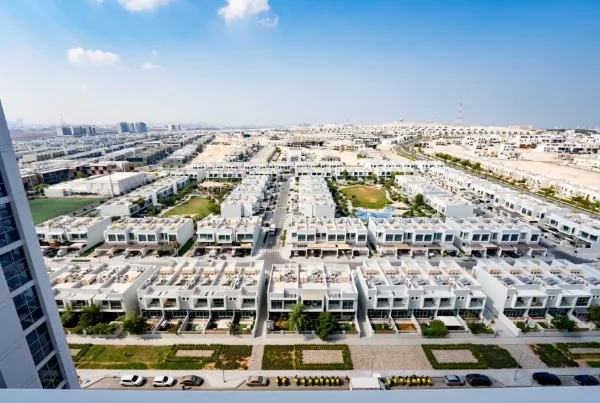


Dubai Real Estate 2026: Oversupply Crash or Actual Market Demand?
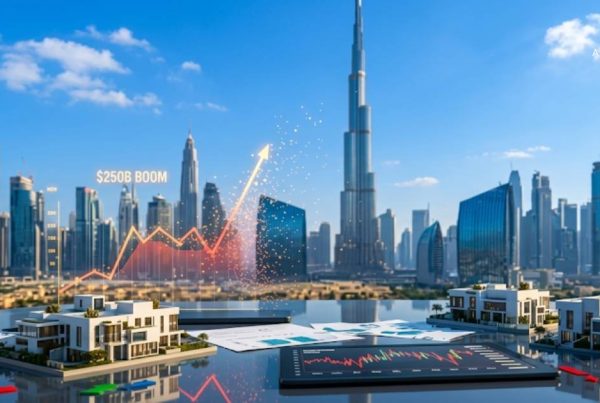
The relentless surge of new project launches in Dubai has reignited a fierce global debate: is the city heading toward a massive oversupply crash, or is actual market demand strong enough to absorb the incoming pipeline?
Headline statistics warn of large numbers of units scheduled for delivery, creating anxiety among investors who remember older boom-and-bust cycles. But headline supply numbers alone do not tell the full story. To understand Dubai’s real estate outlook in 2026, investors must look deeper at physical construction progress, population growth, transaction liquidity, rental demand, regulatory protections and community-level supply concentration.
The more accurate reading is that Dubai is not moving toward a uniform collapse. It is transitioning into a mature, segmented and more supply-sensitive market. Some apartment-heavy districts may face price flexibility and slower rental growth. At the same time, prime villas, well-connected family communities, commercial offices and scarce waterfront assets remain supported by structural demand.
For investors, the real question is not whether Dubai has oversupply risk. It does. The better question is where that risk is concentrated, which assets are protected by genuine demand, and how to buy without becoming exposed to the weakest part of the pipeline.
For a direct correction-focused view, read Dubai Real Estate Market Faces Imminent Correction: Supply Surge Meets Slowing Demand.
Why Oversupply Fears Exist
Oversupply fears are not imaginary. Dubai has seen a major wave of project launches, especially across off-plan residential communities. Developers have been active because demand has been strong, prices have risen sharply over recent years, and international investor appetite remains deep.
The concern is simple: if too many units complete at the same time, landlords may compete harder for tenants, rents may soften, sellers may become more negotiable, and weaker off-plan investors may struggle to exit at a premium.
This risk is strongest where future supply is concentrated in similar product types. Compact apartments, studios and one-bedroom units in high-launch districts can face more competition than scarce villas or prime waterfront assets.
The mistake, however, is assuming that all announced units arrive on schedule and affect every area equally. Dubai’s supply risk is real, but it is not evenly distributed.
Headline Supply vs Actual Handover Reality
The first issue investors must understand is the gap between announced supply and actual handovers. A unit being launched, announced or scheduled does not mean it is delivered immediately into the market.
Construction timelines are affected by contractor capacity, financing, authority approvals, project phasing, developer strategy, material availability and handover sequencing. This creates what analysts often call the materialization gap: the difference between paper supply and units that actually become usable homes on time.
That distinction matters. Oversupply becomes dangerous when large volumes physically hit the market at once. If supply arrives gradually over several years, the effect can be absorbed more easily by population growth, tenant movement and investor demand.
In H1 2026, Dubai delivered around 24,800 homes, a large number but still far below the most extreme headline pipeline discussions. That supports a more balanced interpretation: supply is increasing, but actual completed stock is still being paced by real-world delivery constraints.
For a broader myth-versus-reality breakdown, read The Oversupply Myth in Dubai Real Estate.
The Demand Side: Dubai’s Population Growth Still Matters
Oversupply analysis is incomplete without population analysis. Dubai’s demand base is not static. The city continues to attract residents, entrepreneurs, professionals, investors, remote workers, family offices and companies expanding into the region.
By late July 2026, Dubai’s population had crossed 4.74 million, with more than 161,000 residents added since the beginning of the year. This matters because housing demand is ultimately linked to people: tenants, end-users, families, employees and investors who need real places to live or rent.
Dubai’s population story also differs from earlier speculative cycles. Many buyers are not only flipping contracts. They are relocating, applying for residency, moving families, forming companies and building long-term bases in the UAE.
This does not cancel oversupply risk. But it does create an absorption engine that many headline crash arguments ignore.
Dubai Land Department Sales Data: Demand Has Not Disappeared
If Dubai were already entering a market-wide collapse, the sales data would show severe distress. Instead, the market remains liquid, although more selective.
Dubai recorded AED 252 billion in total real estate transactions in Q1 2026, up 31% year-on-year in value. H1 2026 sales then reached around AED 286.4 billion across more than 79,000 transactions. These figures do not point to a frozen market.
They point to a market where capital is still active, but buyers are more selective about pricing, location, developer quality and risk. This is exactly what a maturing market should look like after years of aggressive growth.
The key shift is from broad momentum to asset selection. In 2021 to 2024, many buyers assumed almost every launch would rise. In 2026, investors are comparing micro-markets, handover dates, rental yield, service charges and future supply before committing.
For the wider forecast, read Dubai Real Estate Expert Forecast 2026: Rental, Secondary and Off-Plan Trends.
Correction vs Crash: The Difference Investors Must Understand
A correction is not the same as a crash. A correction means prices stabilise, sellers negotiate, rents flatten in some areas, and weaker assets underperform after a period of rapid growth. A crash means forced selling, systemic defaults, frozen liquidity and widespread confidence loss.
Dubai in 2026 is showing more signs of correction and segmentation than market-wide collapse. That means some buyers may gain negotiation power, especially in apartment-heavy or launch-heavy communities. It also means investors who bought weak assets at inflated prices may face pressure.
But a correction can be healthy. It removes unrealistic pricing, forces developers to become more disciplined, and gives serious buyers a better entry point.
The real danger is not correction. The real danger is buying the wrong asset at the wrong price in the wrong micro-market while assuming Dubai moves as one single market.
The Micro-Market Map: Where Risk Is Higher
Dubai’s oversupply risk is most visible in areas where multiple developers are delivering similar apartment products to the same tenant pool.
Communities with large numbers of studios and one-bedroom apartments can face more direct competition. This does not mean these areas are bad investments. It means investors must buy more carefully.
Jumeirah Village Circle, Dubailand, parts of Dubai South, Arjan and other high-supply districts can still perform if the entry price is right, the building is well managed, service charges are reasonable, and tenant demand is strong. But generic units bought at aggressive launch prices may face slower resale and rental competition.
In oversupply-sensitive zones, investors should underwrite conservatively. Use lower rent assumptions, longer vacancy buffers, realistic service charges and clear exit pricing.
Where Demand Looks More Protected
Not all property types face the same risk. Villas, townhouses, high-quality family communities, premium waterfront assets and Grade-A commercial offices have stronger structural support than generic apartment stock in oversupplied corridors.
Family housing remains relatively scarce compared with apartments. Global high-net-worth buyers continue to target luxury villas, waterfront homes and branded residential assets. Meanwhile, Dubai’s commercial office market has also benefited from corporate expansion and Grade-A supply shortages.
This is the key point: Dubai is becoming bifurcated. Some segments may soften. Others may remain resilient or continue appreciating because the supply-demand equation is tighter.
Investors should not ask, “Will Dubai go up or down?” They should ask, “Which Dubai am I buying?”
Why 2026 Is Not a Simple Repeat of 2008
The 2008 comparison appears in almost every Dubai crash debate. It is understandable, but the structure of today’s market is different.
The current market has stronger regulation, better escrow controls, more transparent transaction data, wider international buyer diversity, more mature developers and a larger end-user base. Dubai Land Department also provides project-status tools and real estate data channels that give buyers more visibility than in earlier cycles.
Off-plan buyers are also protected by escrow account rules requiring buyer funds to be placed in project escrow accounts. DLD’s own FAQ explains that amounts received from buyers of off-plan units are deposited into the project escrow account, with disbursements linked to project needs and construction-stage controls.
This does not mean the market is risk-free. It means the systemic risk profile is not the same as the pre-escrow, heavily speculative environment that shaped older crash narratives.
The Escrow and Project-Status Safety Layer
Dubai’s regulatory architecture is one of the biggest differences between today’s market and earlier cycles.
Off-plan projects must follow registration and escrow procedures. Dubai Land Department also provides a project status enquiry service that allows customers to check project completion percentage and details in Dubai.
This gives buyers an important due-diligence tool. Instead of relying only on developer marketing, buyers can check project status, ask about escrow, review developer history and understand construction progress before committing.
Regulation does not remove all risk. Developers can still delay. Markets can still soften. But escrow and project-status transparency reduce the probability of uncontrolled paper-only speculation.
Rental Yields: A Stabilising Force, But Not a Guarantee
Rental yields remain one of Dubai’s strongest investor arguments. Engel & Völkers reported average gross rental yields of 6.6% in H1 2026, while many mid-market apartment communities can still offer attractive income returns when bought correctly.
However, yields should be treated carefully. Gross yield is not net profit. Service charges, vacancy, maintenance, property management, furnishing and renewal limits can reduce real returns.
In oversupply-sensitive areas, rental growth may flatten as tenants gain more choice. That does not automatically destroy the investment case, but it means investors must stop underwriting aggressive rent growth as if the market will keep rising every year.
The safer strategy is to buy based on today’s realistic rent, not tomorrow’s optimistic rent.
Off-Plan Handover Materialization Rates: The Real Number to Watch
Investors should stop looking only at launch announcements and start tracking handover materialization. This means asking how many scheduled units are likely to complete on time, not how many were announced in brochures.
A market can announce a huge pipeline, but if only a portion reaches completion within the expected year, the supply pressure is spread out. This is exactly why construction progress, escrow status, contractor capacity and project phasing matter.
For off-plan investors, the key due-diligence questions are clear. What is the current construction percentage? Has the developer delivered similar projects before? Is the project properly registered? What is the escrow structure? How many similar units will hand over nearby at the same time?
The answer to those questions matters more than the headline pipeline number.
Investor Strategy: How to Buy in a Supply-Sensitive Market
A supply-sensitive market does not mean investors should stop buying. It means they should buy more intelligently.
First, avoid generic oversupply. If a community has thousands of similar units entering the market, only buy if the price, building quality and rental evidence justify the risk.
Second, prioritise scarcity. Scarce layouts, strong views, prime locations, family homes, waterfront assets and Grade-A commercial offices usually have better defence than commodity apartments.
Third, check real handover timing. Do not rely only on expected completion dates. Review construction progress and developer history.
Fourth, calculate net yield. Use conservative rent assumptions and deduct real ownership costs.
Fifth, think exit liquidity. Ask who will buy the property from you later and why.
For pricing, supply and ROI outlook, read Dubai Real Estate Forecast 2026: Prices, Supply and ROI.
Ready Property vs Off-Plan in an Oversupply Debate
In a supply-sensitive market, ready property becomes more attractive for some buyers because the risk is visible. The building exists. The rent can be checked. The service charges are known. The unit can be inspected. The tenant status can be verified.
Off-plan still works when the project is strong, the developer is credible, the pricing is fair and the location has genuine future demand. But buying off-plan purely because the payment plan is easy is dangerous in 2026.
A ready property may offer lower headline upside, but better certainty. An off-plan property may offer staged payments and capital growth potential, but higher future-supply and delivery risk.
The right choice depends on budget, risk tolerance, timeline and investment objective.
For second-purchase planning, read How to Buy Your Second Property in Dubai’s Rebounding Market.
Aurantius View: The Market Is Not Crashing, It Is Segmenting
The most accurate view of Dubai real estate in 2026 is neither extreme optimism nor crash panic. The market is segmenting.
Some apartment-heavy areas will face more competition. Some sellers will need to negotiate. Some off-plan premiums will become harder to justify. Some investors who bought without due diligence may be exposed.
At the same time, demand remains visible. Population growth is strong. Transaction liquidity remains high. Rental yields remain globally competitive. Regulation is stronger than in past cycles. Prime and scarce segments still show resilience.
That is not the definition of a market-wide crash. It is the definition of a more mature market where bad assets get punished and good assets continue to attract capital.
FAQ: Dubai Real Estate Crash Fears and Oversupply Risk
Question: Will Dubai real estate crash in 2026?
Answer: A market-wide crash is not the most supported reading of current data. Dubai is more likely entering a segmented correction where oversupplied apartment areas may soften while scarce villas, prime communities and commercial offices remain better supported.
Question: Is Dubai facing property oversupply in 2026?
Answer: Dubai has real supply risk, especially in apartment-heavy districts with many similar units. However, announced supply is different from actual handovers, and population growth continues to support absorption.
Question: Which Dubai areas have higher oversupply risk?
Answer: Higher risk is usually found in communities with large volumes of similar studios and one-bedroom apartments entering the market. Investors should be careful in high-supply apartment corridors and check building-level fundamentals before buying.
Question: Why is Dubai’s market different from 2008?
Answer: Today’s market has stronger escrow rules, more transparent transaction data, better project-status visibility, deeper end-user demand and a larger global buyer base. These factors do not remove risk, but they reduce the chance of a 2008-style repeat.
Question: Are villas safer than apartments in Dubai?
Answer: Villas and townhouses often have stronger scarcity support than apartments because single-family homes represent a smaller share of total stock. However, pricing, location, community quality and buyer demand still matter.
Question: Should investors avoid off-plan property in 2026?
Answer: Not necessarily. Off-plan can still work when the developer is credible, the project is registered, the location has real demand and the price is fair. Investors should avoid weak projects sold only on payment-plan marketing.
Question: What is the safest Dubai property strategy in 2026?
Answer: The safest strategy is to buy scarce, well-located assets at realistic prices, verify handover timelines, calculate net yield, avoid generic oversupply and keep a clear exit strategy.
Question: Can Aurantius help investors assess oversupply risk?
Answer: Yes. Aurantius Real Estate helps investors compare Dubai micro-markets, review supply pipelines, assess developer risk, calculate rental yields, evaluate ready vs off-plan options and identify resilient property opportunities.
Conclusion: Dubai’s Oversupply Risk Is Real, But Not Uniform
Dubai’s 2026 real estate market should not be reduced to panic headlines. The city does face oversupply risk, especially in apartment-heavy locations with large numbers of similar units under construction. But the broader demand engine remains active, supported by population growth, transaction liquidity, rental demand and stronger regulation.
The correct conclusion is not “Dubai will crash” or “Dubai has no risk.” The correct conclusion is that Dubai is moving into a two-speed market.
Weak, generic and oversupplied assets may correct. Scarce, well-located and income-supported assets may hold value or continue performing. Investors who understand that distinction can use the current market to buy more intelligently.
The winners in 2026 will not be the buyers chasing every launch. They will be the investors who read actual handover data, track population demand, compare micro-markets and underwrite based on real numbers.
Aurantius Real Estate helps investors separate crash headlines from real market data, compare Dubai property supply risks, identify resilient communities and structure property decisions around long-term capital protection.
Concerned About Oversupply? Speak with an Aurantius adviser to compare actual handover data, rental yields, community-level supply, ready vs off-plan opportunities and the safest Dubai property strategies for 2026.
Related reading: Dubai Real Estate Market Faces Imminent Correction, The Oversupply Myth in Dubai Real Estate, Dubai Real Estate Expert Forecast 2026, Dubai Real Estate Forecast 2026 and How to Buy Your Second Property in Dubai.