
New Dubai Malls Pipeline for 2026 to 2028: What Retail Expansion Signals for Investors, Mobility, and Community Demand
Dubai’s next wave of retail development is moving beyond conventional shopping formats toward mixed-use nodes that blend dining, leisure, wellness, and public realm activation. Six new malls announced or under construction add fresh capacity across growth corridors, with several openings targeted for 2026 and one mega-project scheduled later in the cycle. Two landmark malls are also undergoing major expansions that reshape their tenant mix and visitor experience. For investors, the pipeline offers signals on where residential demand, infrastructure planning, and discretionary spending are expected to concentrate.
Large-format retail in Dubai functions as social infrastructure as much as commercial real estate. Malls anchor catchment areas, lift footfall for surrounding streets, support hospitality demand, and strengthen the leasing outlook for nearby residential stock. This matters in districts with high transaction liquidity such as Downtown Dubai and Business Bay, where premium retail and entertainment ecosystems influence short-term rental performance and long-stay tenant retention.
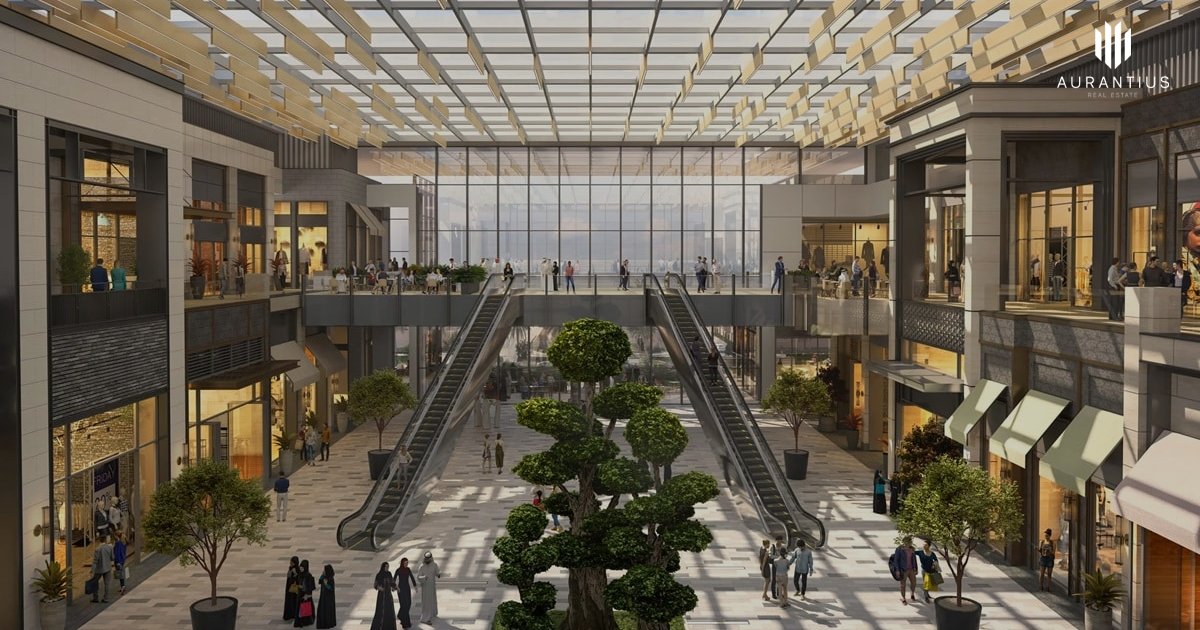
Dubai Square represents the longest-duration bet in the current pipeline. The concept is positioned as an “indoor city” at Dubai Creek Harbour, described at a scale of 2.6 million square metres, with design provisions wide enough for electric vehicles to circulate inside. The project has been publicly discussed since 2018, with revisions highlighted in 2024, and an opening target cited for 2028. The investment relevance is the clustering effect: a destination of that scale tends to reprice adjacent communities through stronger visitor volumes, higher retail density, and long-term employment creation.
Ghaf Woods Mall introduces a different thesis: retail integrated into a forest-style residential environment. The mall is planned as part of a Dh15.4 billion Ghaf Woods development by Majid Al Futtaim, described as a nature-first community with significant tree planting. A forest-integrated retail space changes how dwell time and repeat visitation are generated, shifting demand toward leisure programming and outdoor comfort during seasonal peaks. Retail nodes built around community identity often show resilient mid-week footfall driven by residents rather than tourists.
Sobha Mall targets a premium community-driven model with a defined construction timeline. A Dh210 million mall is under development in Sobha Hartland, described at 339,000 square feet with cultural, retail, and dining components, with completion expected by late 2026. Planned amenities cited include a supermarket, gym, play courts, a soft play zone, and a diverse restaurant mix. A project at this scale indicates confidence in local residential absorption and the spending power of long-term residents.
Liwan Mall and Villa Square point to retail capacity expansion in Wadi Al Safa submarkets, aligning with housing growth in Dubailand-adjacent corridors. Liwan Mall is described as a luxury destination in Wadi Al Safa 2 with an opening window in the second half of 2026, with plans for luxury retail, cafés, green spaces, and a Spanish-inspired design language. Villa Square, described at 124,000 square feet in Wadi Al Safa 5, targets completion in the third quarter of 2026, with family dining, wellness zones, and indoor-outdoor flow intended to fit suburban living patterns. The thesis is practical: as households concentrate in outer districts, retail supply follows to reduce reliance on legacy centres.
South Bay Mall is positioned as a catalyst for Dubai South, a district tied to aviation, logistics, and long-term population growth. The mall is described at around 200,000 square feet across ground, first, and rooftop levels with lagoon views, open-air walkways, 60 retail units, two major stores, and a premium food hall. Wellness facilities such as a clubhouse, gym, spa, and clinic are part of the cited program. This is a “town centre” format that typically supports stable daily demand rather than purely weekend traffic.
Expansion plans at Dubai Mall and Mall of the Emirates reinforce how incumbent assets protect market share through redevelopment rather than standing still. Dubai Mall has a cited Dh1.5 billion investment plan including 240 new luxury retail and dining options, with a new exhibition centre expected to take event bookings in early 2026. Mall of the Emirates has a cited Dh5 billion makeover plan that includes 100 new stores and a new outdoor food and beverage courtyard targeted for early 2027. These projects raise competitive pressure on mid-tier malls, pushing the broader market toward stronger curation and experiential differentiation.
For real estate investors, retail expansions influence leasing outcomes through improved lifestyle infrastructure. Waterfront communities with high visitor density such as Dubai Marina and Palm Jumeirah often capture premium spending linked to tourism and high-income residents. Suburban districts with family demand such as Dubai Hills Estate tend to benefit from retail projects that deepen convenience and reduce commuting friction. Yield-oriented zones such as Jumeirah Village Circle can see rental stability gains when nearby retail reduces lifestyle gaps for tenants.
Developer strategy shapes how retail nodes connect to residential supply. Large master developers like Emaar often integrate destination retail into urban planning, while groups like Meraas lean toward lifestyle districts with strong dining and waterfront activation. Residential brands such as Sobha Realty and DAMAC influence the surrounding retail mix through community positioning and resident profile. Waterfront ecosystem planning by Nakheel and premium community delivery by Select Group add further variety in how demand clusters form around leisure and amenity access.
Off-plan supply remains an important parallel lens, since new retail often coincides with new housing delivery and changing tenant demand. Listings such as Breez by Danube, Peace Lagoons, Rove Home Marasi Drive, Marina Cove, Samana Resorts, and Sobha Elwood reflect the market’s focus on lifestyle-led communities, branded living, and amenity density. Retail growth tends to support exit liquidity in these projects when handovers align with operational retail delivery.
Investors tracking the next phase of Dubai’s retail footprint also monitor corridor-level linkages. Growth areas such as Dubailand benefit from new local malls that reduce dependence on legacy assets. Emerging residential and innovation corridors such as Dubai Silicon Oasis and Expo Living fit the pattern of integrated planning where retail supply supports daily life for expanding communities. Waterfront-connected destinations such as Creek Beach also align with the destination retail thesis linked to tourism and premium residential demand.
Broader developer participation indicates a competitive retail and residential environment with multiple product categories. Market activity includes brands such as Danube, Samana, Binghatti, Prescott, and Reef Luxury Developments, each targeting distinct buyer segments through unit sizing, amenity strategy, and price positioning. This diversity supports liquidity, while placing higher importance on due diligence related to delivery records and service charge sustainability.
Aurantius Real Estate helps investors map infrastructure and retail expansion to real estate strategy, with market intelligence across prime districts and growth corridors, plus access to curated off-plan and ready opportunities aligned with yield discipline and long-hold value. For buyers assessing where new malls, expansions, and destination projects can influence tenant demand and resale liquidity, Aurantius Real Estate provides structured guidance built for professional investment decision-making.